

Life

Small things that make everyday life easier
Life

Small Things That Make Everyday Life Surprisingly Easier

Some days don’t feel difficult because anything major went wrong. They feel difficult because of twenty tiny things. You can’t find your keys. You forgot to charge your phone. You have no idea what to make for dinner. The clothes you wanted to wear are still in the laundry. Your kitchen counter is covered with things you don’t know where to put. None of these problems is huge on its own. But when they keep happening, they can make an ordinary day feel unnecessarily exhausting. The good news is that you don’t always need a complete lifestyle makeover to fix this. Sometimes, a few small things that make everyday life easier can remove a surprising amount of daily friction. These aren’t complicated routines that require waking up at 5 a.m. or spending money on expensive organizers. They’re simple changes you can fit into a normal life. Why Small Changes Can Make Such a Difference When a small task is repeated every day, the time and mental effort can add up. Preparing something the night before, keeping important items in the same place, or writing down tomorrow’s priorities may only take a few minutes. But these small actions can prevent you from repeatedly making the same decisions or searching for the same things. Research on habit formation also suggests that repeatedly connecting a behavior with a routine or cue can help it become more automatic over time. So instead of trying to change everything at once, start by making one part of your day easier. Here are 10 simple places to start. 1. Prepare One Thing for Tomorrow Tonight You don’t have to create an elaborate nighttime routine. Just prepare one thing that tomorrow-you will need. It could be: Choosing tomorrow’s clothes Packing your bag Charging your phone Filling your water bottle Preparing your work items Putting your keys where you’ll find them Writing down an important task for tomorrow This works because you’re solving a future problem before it happens. Imagine waking up already knowing what you’re wearing and where your keys are. That’s a tiny change, but it removes unnecessary decisions from your morning. You don’t need to prepare your entire day. Just ask yourself: “What is one thing I can do tonight that will make tomorrow morning easier?” Then do that one thing. 2. Give Important Things a Permanent Home If you regularly spend five minutes looking for your keys, charger, wallet, headphones, documents, or other essentials, the problem may not be that you’re forgetful. You may simply not have a consistent place for them. Choose a permanent spot for the things you use frequently. For example: Keys → one bowl or hook near the entranceWallet → one specific drawer or trayChargers → one charging areaImportant documents → one folderEveryday bag → one specific hook or chair The goal isn’t to make your home look perfectly organized. The goal is to make finding things easier than losing them. Once you get used to putting something in the same place, you don’t have to think about where it belongs every time. 3. Keep a “Don’t Forget” List Your brain isn’t meant to constantly remember every little thing. Appointments. Bills. Things you need to buy. Messages you need to send. Something you need to take somewhere. An idea you don’t want to forget. Instead of repeatedly telling yourself, “I need to remember this,” write it down. You can use: A notes app A small notebook A planner A simple checklist Your phone’s reminders The important part is having one reliable place for these things. Otherwise, you can end up with reminders scattered across screenshots, messages, random pieces of paper, and your memory. A simple list can make your mind feel much less crowded. 4. Make Your Most-Used Things the Easiest to Reach Look around your home. Are the things you use every day stored in places that make sense? If you use something constantly, you shouldn’t have to move five other things to reach it. Keep frequently used items close to where you actually use them. For example: Keep everyday skincare where you get ready. Keep frequently used kitchen items within easy reach. Keep your work essentials together. Keep cleaning supplies near the areas where you use them. Keep your everyday shoes somewhere accessible. This is one of the simplest small things that make everyday life easier because you’re designing your surroundings around your real life. Your home doesn’t have to look like a showroom. It should work for you. 5. Create a Five-Minute Reset You don’t always need to clean your entire home. Sometimes you just need to stop the mess from getting bigger. Try a five-minute reset at the end of the day. Set a timer and quickly: Put clothes where they belong Clear your main surface Put dishes in the kitchen Return random items to their places Throw away obvious rubbish Put tomorrow’s essentials together When the timer ends, you can stop. That’s the point. You’re not trying to achieve perfection. You’re simply giving your future self a cleaner starting point. Breaking a larger task into smaller pieces can also make it feel more manageable than waiting until everything has accumulated into one huge job. 6. Decide Some Things Once How many times have you stood in front of your wardrobe thinking: “What am I going to wear?” Or opened the refrigerator and thought: “What am I going to eat?” Or spent ten minutes deciding when you’re going to do something you’ve been putting off? Some decisions can be made once and reused. For example, you could have: A few reliable breakfast options A few easy weekday meals A simple morning routine A basic work outfit formula A regular grocery list A standard cleaning schedule A usual place for frequently used items This doesn’t mean every day has to be identical. It simply means you don’t have to reinvent your routine every morning. Reducing unnecessary decisions can leave more mental energy for things that actually require

Person planning how to design your life at a minimalist desk
Life

Design Your Life: 9 Ways to Build a Life You Don’t Constantly Need a Break From

Modern life can sometimes feel like a constant cycle of work, responsibilities, notifications, deadlines, and recovery. You get through a busy week while looking forward to the weekend, only to spend much of it recovering before another busy week begins. A vacation can give you a much-needed reset, but what happens when you return to the same routine and immediately start waiting for your next break? Maybe the solution isn’t always another vacation. Maybe it’s learning how to design your life in a way that makes your everyday experience more enjoyable, manageable, and meaningful. To design your life doesn’t mean creating a perfect routine or becoming productive every minute of the day. It means making intentional choices about how you spend your time, energy, attention, and free time. Here are nine practical ways to design your life so that your everyday routine feels less exhausting and more fulfilling. What Does It Mean to Design Your Life? To design your life means to consciously create an everyday lifestyle that reflects what matters to you instead of simply following a routine because you’ve always followed it. Your ideal lifestyle doesn’t have to look like someone else’s. Maybe you don’t need a packed schedule. Maybe you don’t enjoy being constantly productive. Maybe your ideal morning is slow and quiet rather than filled with a long list of habits. When you design your life, you begin asking yourself important questions: What actually makes me feel good? What constantly drains my energy? What do I want more time for? What am I doing simply because I feel I should? What would an enjoyable ordinary day look like? Your goal isn’t to create someone else’s version of a good life. It’s to create a lifestyle that actually works for you. 1. Stop Making Productivity the Center of Your Life Productivity is useful, but constantly trying to maximize your productivity can make life feel like one long checklist. There is always another email to answer, another goal to reach, another skill to learn, or another task to complete. If your entire day is measured by how much you accomplished, you may eventually feel guilty for resting. Instead of asking: “How much can I get done today?” try asking: “What actually deserves my time today?” When you design your life around what matters rather than how much you can accomplish, your definition of a successful day can change. You don’t need to complete twenty tasks to have a productive day. Sometimes, completing a few important things and having enough energy left for yourself is a much better outcome. Make space for activities that have no productivity purpose. Read. Walk. Listen to music. Talk to someone. Sit outside. Do nothing for a while. Your value isn’t determined by your daily output. 2. Design Your Day Around Your Energy Most people plan their days around time, but your energy matters too. You might have eight free hours but only a few of them may be your most focused and energetic hours. Pay attention to your natural patterns. When do you concentrate best? When do you feel tired? When are you most creative? When do you naturally want to slow down? Whenever possible, schedule demanding tasks during periods when you have more energy. Save simpler activities for times when your energy naturally drops. You should also notice which activities consistently drain you. For example, constantly checking notifications may leave you mentally tired even if you haven’t done anything physically demanding. Saying yes to every invitation may leave you with no time to recharge. Learning how to design your life around your energy can help you stop treating every hour as if it has the same value. 3. Create Boundaries With Your Phone Your phone is one of the most useful tools in modern life, but it can also make it difficult to truly switch off. Notifications, social media, messages, news, and endless scrolling can follow you from the moment you wake up until the moment you go to sleep. You don’t need to completely give up technology to create healthier boundaries. Start small. Try: Turning off unnecessary notifications Keeping your phone away during meals Avoiding social media immediately after waking up Creating a phone-free period before bed Removing apps you rarely use Taking short screen breaks during the day Part of learning to design your life is deciding where your attention goes. The goal isn’t to stop using your phone. The goal is to stop letting your phone automatically decide what deserves your attention. When you control your attention, you create more room for real experiences. 4. Make Your Environment Easier to Live In Your surroundings can influence your everyday experience more than you might realize. A cluttered desk can make working feel more difficult. A messy bedroom can make relaxing harder. Constantly searching for things can create unnecessary frustration. You don’t need to completely redesign your home or spend a lot of money. Start with the spaces you use most. Clear your desk. Organize your everyday items. Remove things you don’t use. Keep frequently needed objects somewhere easy to reach. You can also create small areas for specific activities. A comfortable reading corner can encourage you to read more. A clean workspace can make studying or working easier. A calm bedroom can help create a better transition into your evening. When you design your life, your physical environment should support the lifestyle you want instead of constantly making everyday tasks harder. Sometimes, removing unnecessary things is enough to make life feel lighter. 5. Leave Empty Space in Your Schedule A completely packed schedule can make you feel productive, but it can also leave you exhausted. If every hour is filled with work, errands, social plans, and responsibilities, there is no room for unexpected events or genuine rest. Try leaving some empty space in your schedule. You don’t have to know exactly what you’ll do with every free moment. Maybe you’ll take a walk. Maybe you’ll read. Maybe you’ll finish

Life

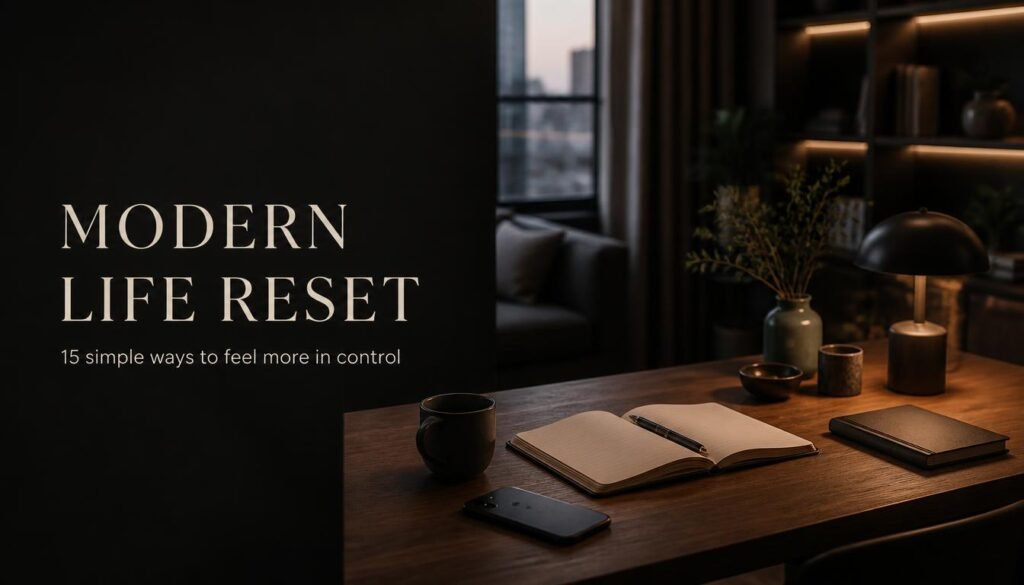
The Modern Life Reset: 15 Things to Fix When Your Life Feels Chaotic

There are periods when life feels messy for no obvious reason. A life reset can help you step back, clear the clutter, and regain a sense of control. Your room isn’t necessarily that messy. Your work isn’t necessarily that difficult. Your phone still works, your calendar is still functioning, and technically, everything is fine. Yet somehow, you feel behind. You wake up already thinking about everything you haven’t done. Your phone distracts you. Your home feels cluttered. Small tasks keep getting postponed. Your sleep schedule is inconsistent. You have 15 browser tabs open, 42 unread messages, and a growing list of things you keep telling yourself you’ll deal with “later.” When enough small things pile up, everyday life can start feeling much harder than it needs to. The solution isn’t necessarily to completely reinvent yourself. Sometimes, you simply need a reset. A reset means looking at the areas creating the most friction in your life and fixing them one by one. You don’t need a perfect routine or an incredibly productive morning. You just need to make your everyday life a little easier to operate. Here are 15 places to start. 1. Clear the Surfaces You See Every Day Start with the most visible clutter.   Your desk. Kitchen counter. Bedside table. Bathroom counter. Entryway. You don’t have to reorganize your entire home. Pick one surface and remove everything that doesn’t need to be there. Visual clutter can make a space feel more chaotic, while small, regular resets can be much easier to maintain than occasional marathon cleaning sessions. Use a simple rule: Keep what you use. Put away what you need. Remove what you don’t. A clear surface gives you an immediate sense that something is under control.  2. Fix Your Sleep Schedule Before Fixing Everything Else It’s tempting to start a new life on Monday. 5 a.m. wake-ups. Gym. Meditation. Journaling. Reading. Meal preparation. By Wednesday, you’re exhausted. Instead, start with sleep. Try going to bed and waking up around the same time most days. Give yourself a reasonable amount of sleep, and create a short wind-down period before bed. You don’t need a complicated nighttime routine. Dim the lights. Put your phone away. Prepare for tomorrow. Read something. Go to bed. A rested version of you makes better decisions than an exhausted version of you. 3. Do a 15-Minute Digital Declutter Your physical environment isn’t the only place that gets messy. Your digital life can become chaotic too. Start with your phone. Delete: Apps you haven’t used in months Screenshots you don’t need Duplicate photos Old downloads Unnecessary notifications Random files Then look at your home screen. Keep the apps you genuinely use and move distracting ones somewhere less convenient. You don’t have to delete social media. The goal isn’t to become a digital monk. The goal is to make your phone work for you instead of constantly asking for your attention. 4. Write Down Everything You’re Trying to Remember A surprising amount of stress comes from trying to keep your entire life inside your head. Appointments. Emails. Things you need to buy. People you need to call. Ideas. Bills. Projects. Things you promised someone you’d do. Get them out of your head. Open a notebook or notes app and make one giant list. Don’t organize it yet. Just write everything down. Once it’s visible, you can decide what actually matters. Your brain is much better at thinking than acting as a permanent storage system.

Save more and live well with smart spending habits
Life

15 Simple Ways to Save Money and Feel Better About Spending

Saving money does not have to mean giving up everything you enjoy. In fact, the best way to save money is to build habits that make your life easier while reducing unnecessary spending. You do not need an extreme budget, a completely restrictive lifestyle, or a long list of things you can never buy again. Small, realistic changes can make a noticeable difference over time. Whether you are trying to build an emergency fund, reach a financial goal, or simply have more money left at the end of the month, these 15 practical money-saving tips can help you spend smarter without feeling deprived. 1. Track Where Your Money Actually Goes Before trying to save money, understand your current spending. For one month, keep track of everything you spend, including small purchases such as coffee, snacks, delivery fees, subscriptions, and online shopping. You may discover that some expenses are much higher than you expected. The goal is not to judge yourself. It is simply to identify where your money is going. Once you know your spending patterns, you can decide what is worth keeping and what can be reduced.   2. Use the 24-Hour Rule for Impulse Purchases Online shopping makes it incredibly easy to buy something within seconds. Instead of immediately purchasing something you want, wait 24 hours. Add the item to your wishlist or leave it in your cart and come back the next day. If you still want it and it fits your budget, you can consider buying it. This simple pause helps separate genuine needs and long-term wants from temporary excitement. For expensive purchases, you can extend the waiting period to a week. 3. Create a “Fun Money” Budget One of the biggest reasons strict budgets fail is that they leave no room for enjoyment. Instead of completely eliminating entertainment, shopping, eating out, or hobbies, create a specific fun money budget. For example, you might decide that a certain amount each month is available for restaurants, movies, clothes, hobbies, or other personal purchases. Once that money is spent, you wait until the next month. This gives you freedom while still keeping your overall spending under control. 4. Cook More Meals at Home You do not have to stop eating out completely. Instead, try replacing a few restaurant or food-delivery meals with homemade versions each week. Cooking at home can also be easier when you keep a few simple meals in rotation. You could prepare rice bowls, sandwiches, pasta, wraps, salads, or other quick meals that do not require complicated recipes. The goal is convenience without constantly paying restaurant prices.   5. Plan Your Grocery Shopping A grocery list can prevent surprisingly large amounts of unnecessary spending. Before going shopping, check what you already have at home. Then make a list based on the meals you actually plan to prepare. Try not to shop when you are extremely hungry because it can make impulse purchases more tempting. You can also compare prices, choose store brands when they offer good value, and avoid buying large quantities of food simply because they are on sale. A discount is not a saving if you would not have bought the product otherwise. 6. Cancel Subscriptions You Barely Use Take a look at your recurring payments. You might be paying for streaming services, apps, memberships, cloud storage, or other subscriptions that you rarely use. Ask yourself: “Did I use this enough last month to justify paying for it?” If the answer is no, cancel it. You can always subscribe again later if you genuinely need the service.   7. Make Your Home Work Harder for You Before buying something new, look around your home and think about whether you already own something that can solve the problem. An old jar can become storage. A spare container can organize small items. Clothes you rarely wear might be altered or reused. This mindset reduces unnecessary purchases and encourages you to get more value from things you already own. 8. Use the “One In, One Out” Rule This is particularly useful for clothes, shoes, accessories, kitchen items, and other belongings. Whenever you buy something new, consider removing something similar that you no longer use. For example, if you buy a new jacket, you might donate or sell an old jacket you rarely wear. This prevents your home from becoming overcrowded and makes you think twice before buying something you do not really need. 9. Compare Prices Before Big Purchases For expensive purchases, avoid buying the first option you find. Compare prices from different stores and check whether there are better alternatives. Also consider the total cost of owning the product. A cheaper item is not always better if it breaks quickly and needs to be replaced. Think about value, quality, durability, and usefulness, rather than focusing only on the initial price. 10. Learn to Wait for Sales—Without Chasing Them Sales can help you save money, but they can also encourage you to spend more. Instead of browsing sales looking for something to buy, make a list of things you already planned to purchase. Then wait for a suitable discount. This changes your mindset from: “What can I buy because it is on sale?” to: “Can I save money on something I already planned to buy?” That small difference can protect your budget from unnecessary shopping. 11. Try a “No-Spend” Day A no-spend day means you avoid unnecessary purchases for one day. You can still use things you already have at home, prepare your own food, and enjoy free activities. You could read, exercise, watch a movie you already have access to, organize your room, take a walk, or spend time with friends and family. You do not need to turn this into an extreme challenge. Even one or two no-spend days each week can make you more aware of your spending habits.   12. Reduce Convenience Spending Convenience is useful, but constantly paying for it can become expensive. Examples include food delivery, frequent ride-hailing, paid

Scroll to Top