
Productivity

How to Stop Procrastinating When You Know Exactly What You Need to Do

You know what you need to do. You know the email needs to be answered. The assignment needs to be started. The presentation needs to be finished. The room needs cleaning. The application needs to be submitted. You may have even written it down. And yet, somehow, you’re watching another video, checking your phone, making coffee, reorganizing your desk, or telling yourself you’ll start in an hour. Then the hour becomes tomorrow. And tomorrow becomes next week. The frustrating part is that you aren’t confused about what needs to happen. You simply can’t seem to make yourself start. That’s what makes procrastination so frustrating. But procrastination isn’t necessarily a sign that you’re lazy or incapable. Psychological research increasingly looks at procrastination as a problem involving emotion regulation: we delay tasks partly because starting them can bring up boredom, anxiety, frustration, uncertainty, or fear of failure. The good news is that you don’t have to wait until you “feel motivated.” You can make starting easier. Here’s how. 1. Stop Calling Yourself Lazy The first thing to change is the story you’re telling yourself. If you’ve been avoiding something for three days, it’s easy to think: “I’m so lazy.” “I have no discipline.” “Why can’t I just do what everyone else does?” That kind of self-criticism usually doesn’t solve the problem. It can actually make the task feel even more unpleasant because now you’re dealing with both the original task and the guilt surrounding it. Instead, get specific. Ask: “What exactly am I avoiding about this?” Maybe the task is boring. Maybe you don’t know where to begin. Maybe you’re worried the result won’t be good enough. Maybe the project is much larger than it appears. Maybe you simply don’t want to deal with the discomfort of starting. Once you identify the actual problem, you can solve that problem instead of attacking your personality. 2. Make the Task Smaller Than Your Excuses One of the biggest reasons we procrastinate is that a task can feel larger in our heads than it actually is. “Work on my website” sounds enormous. “Write the introduction for one article” is manageable. “Clean the house” sounds exhausting. “Clear the kitchen counter” is concrete. “Study for the exam” is vague. “Read pages 20–30” gives you somewhere to start. This is why breaking large goals into smaller tasks can help. Harvard Health recommends making goals specific and breaking larger tasks into manageable steps rather than leaving them as vague intentions. Don’t ask: “How am I going to finish this?” Ask: “What is the smallest useful action I can take?” That question is much easier to answer. 3. Define the First Five Minutes You don’t need to commit to finishing the entire task. Commit to the beginning. If you need to write an article, your first five minutes could be: Open the document. Write the title. Add three headings. Write one rough paragraph. If you need to study: Open the textbook. Find the chapter. Read two pages. Write down three important points. If you need to clean: Pick up everything from one surface. Put five things away. Throw away the obvious rubbish. The objective isn’t to trick yourself into becoming productive for eight hours. It’s to remove the psychological barrier between thinking about doing something and actually doing it. Very often, starting is harder than continuing. 4. Don’t Wait to Feel Motivated This is one of the biggest procrastination traps. You tell yourself: “I’ll do it when I feel motivated.” But motivation isn’t always the thing that comes before action. Sometimes action comes first. Harvard Health recommends making goals specific, scheduling time for them, and taking manageable steps rather than waiting for motivation to magically appear. Think about exercise. You don’t always feel like going for a walk before you put your shoes on. You put your shoes on first. Then you go outside. The same principle can apply to work. You don’t have to feel ready. You only need to be willing to begin. 5. Make “Starting” Your Goal For a while, forget about finishing. Make the goal: Start. Instead of: “I have to write 2,000 words.” Try: “I’m going to write for 15 minutes.” Instead of: “I need to organize my entire room.” Try: “I’m going to organize one drawer.” Instead of: “I need to finish this project.” Try: “I’m going to open the project and work on it until the timer ends.” This reduces the psychological weight of the task. Research and practical guidance on procrastination often emphasize starting with small, clearly defined periods of work. The APA notes that scheduling even a short initial period can help someone begin a task they’ve been avoiding. 6. Remove the Easiest Distractions Sometimes the problem isn’t the task. It’s everything around the task. Your phone is next to you. Your browser has 18 tabs open. Your notifications keep appearing. You have YouTube one click away. Your email is open. Your television is running in the background. You’re asking yourself to concentrate while surrounding yourself with things designed to steal your attention. Make the desired behaviour easier. Put your phone in another room. Close unnecessary tabs. Turn off notifications. Put your headphones on. Clear your desk. Open only the document or application you need. Harvard Health recommends reducing distractions and focusing on one task at a time rather than trying to multitask. You don’t always need more discipline. Sometimes you need less temptation. 7. Try the “Just 15 Minutes” Rule Set a timer for 15 minutes. During those 15 minutes, do only the task you’ve been avoiding. No phone. No email. No cleaning your desk. No researching productivity systems. Just the task. When the timer ends, you can stop. Or continue if you’re already in the flow. The important part is that you’ve created a clearly defined starting point. If 15 minutes feels too much, make it five. If five feels too much, make it two. The number isn’t magic. The principle is: Make starting so small that your

Better Living

The Modern Life Reset: 15 Things to Fix When Your Life Feels Chaotic

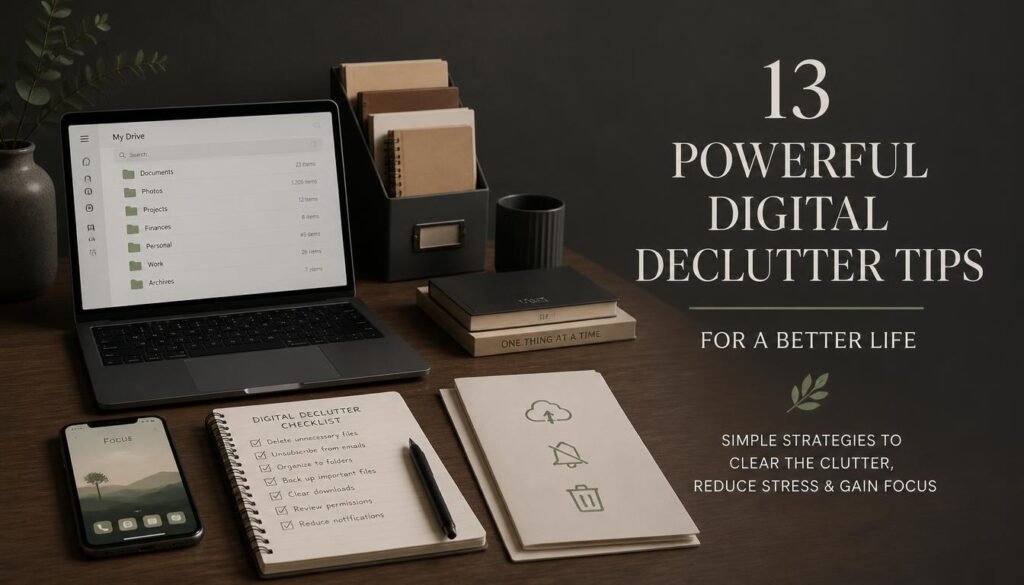
There are periods when life feels messy for no obvious reason. Your room isn’t necessarily that messy. Your work isn’t necessarily that difficult. Your phone still works, your calendar is still functioning, and technically, everything is fine. Yet somehow, you feel behind. You wake up already thinking about everything you haven’t done. Your phone distracts you. Your home feels cluttered. Small tasks keep getting postponed. Your sleep schedule is inconsistent. You have 15 browser tabs open, 42 unread messages, and a growing list of things you keep telling yourself you’ll deal with “later.” When enough small things pile up, everyday life can start feeling much harder than it needs to. The solution isn’t necessarily to completely reinvent yourself. Sometimes, you simply need a reset. A reset means looking at the areas creating the most friction in your life and fixing them one by one. You don’t need a perfect routine or an incredibly productive morning. You just need to make your everyday life a little easier to operate. Here are 15 places to start.   1. Clear the Surfaces You See Every Day Start with the most visible clutter. Your desk. Kitchen counter. Bedside table. Bathroom counter. Entryway. You don’t have to reorganize your entire home. Pick one surface and remove everything that doesn’t need to be there. Visual clutter can make a space feel more chaotic, while small, regular resets can be much easier to maintain than occasional marathon cleaning sessions. Use a simple rule: Keep what you use. Put away what you need. Remove what you don’t. A clear surface gives you an immediate sense that something is under control. 2. Fix Your Sleep Schedule Before Fixing Everything Else It’s tempting to start a new life on Monday. 5 a.m. wake-ups. Gym. Meditation. Journaling. Reading. Meal preparation. By Wednesday, you’re exhausted. Instead, start with sleep. Try going to bed and waking up around the same time most days. Give yourself a reasonable amount of sleep, and create a short wind-down period before bed. You don’t need a complicated nighttime routine. Dim the lights. Put your phone away. Prepare for tomorrow. Read something. Go to bed. A rested version of you makes better decisions than an exhausted version of you. 3. Do a 15-Minute Digital Declutter Your physical environment isn’t the only place that gets messy. Your digital life can become chaotic too. Start with your phone. Delete: Apps you haven’t used in months Screenshots you don’t need Duplicate photos Old downloads Unnecessary notifications Random files Then look at your home screen. Keep the apps you genuinely use and move distracting ones somewhere less convenient. You don’t have to delete social media. The goal isn’t to become a digital monk. The goal is to make your phone work for you instead of constantly asking for your attention. 4. Write Down Everything You’re Trying to Remember A surprising amount of stress comes from trying to keep your entire life inside your head. Appointments. Emails. Things you need to buy. People you need to call. Ideas. Bills. Projects. Things you promised someone you’d do. Get them out of your head. Open a notebook or notes app and make one giant list. Don’t organize it yet. Just write everything down. Once it’s visible, you can decide what actually matters. Your brain is much better at thinking than acting as a permanent storage system.

Money-Saving Tips

15 Practical Ways to Save Money Without Feeling Miserable

Saving money does not have to mean giving up everything you enjoy. In fact, the best way to save money is to build habits that make your life easier while reducing unnecessary spending. You do not need an extreme budget, a completely restrictive lifestyle, or a long list of things you can never buy again. Small, realistic changes can make a noticeable difference over time. Whether you are trying to build an emergency fund, reach a financial goal, or simply have more money left at the end of the month, these 15 practical money-saving tips can help you spend smarter without feeling deprived. 1. Track Where Your Money Actually Goes Before trying to save money, understand your current spending. For one month, keep track of everything you spend, including small purchases such as coffee, snacks, delivery fees, subscriptions, and online shopping. You may discover that some expenses are much higher than you expected. The goal is not to judge yourself. It is simply to identify where your money is going. Once you know your spending patterns, you can decide what is worth keeping and what can be reduced. 2. Use the 24-Hour Rule for Impulse Purchases Online shopping makes it incredibly easy to buy something within seconds. Instead of immediately purchasing something you want, wait 24 hours. Add the item to your wishlist or leave it in your cart and come back the next day. If you still want it and it fits your budget, you can consider buying it. This simple pause helps separate genuine needs and long-term wants from temporary excitement. For expensive purchases, you can extend the waiting period to a week. 3. Create a “Fun Money” Budget One of the biggest reasons strict budgets fail is that they leave no room for enjoyment. Instead of completely eliminating entertainment, shopping, eating out, or hobbies, create a specific fun money budget. For example, you might decide that a certain amount each month is available for restaurants, movies, clothes, hobbies, or other personal purchases. Once that money is spent, you wait until the next month. This gives you freedom while still keeping your overall spending under control. 4. Cook More Meals at Home You do not have to stop eating out completely. Instead, try replacing a few restaurant or food-delivery meals with homemade versions each week. Cooking at home can also be easier when you keep a few simple meals in rotation. You could prepare rice bowls, sandwiches, pasta, wraps, salads, or other quick meals that do not require complicated recipes. The goal is convenience without constantly paying restaurant prices. 5. Plan Your Grocery Shopping A grocery list can prevent surprisingly large amounts of unnecessary spending. Before going shopping, check what you already have at home. Then make a list based on the meals you actually plan to prepare. Try not to shop when you are extremely hungry because it can make impulse purchases more tempting. You can also compare prices, choose store brands when they offer good value, and avoid buying large quantities of food simply because they are on sale. A discount is not a saving if you would not have bought the product otherwise. 6. Cancel Subscriptions You Barely Use Take a look at your recurring payments. You might be paying for streaming services, apps, memberships, cloud storage, or other subscriptions that you rarely use. Ask yourself: “Did I use this enough last month to justify paying for it?” If the answer is no, cancel it. You can always subscribe again later if you genuinely need the service. 7. Make Your Home Work Harder for You Before buying something new, look around your home and think about whether you already own something that can solve the problem. An old jar can become storage. A spare container can organize small items. Clothes you rarely wear might be altered or reused. This mindset reduces unnecessary purchases and encourages you to get more value from things you already own. 8. Use the “One In, One Out” Rule This is particularly useful for clothes, shoes, accessories, kitchen items, and other belongings. Whenever you buy something new, consider removing something similar that you no longer use. For example, if you buy a new jacket, you might donate or sell an old jacket you rarely wear. This prevents your home from becoming overcrowded and makes you think twice before buying something you do not really need. 9. Compare Prices Before Big Purchases For expensive purchases, avoid buying the first option you find. Compare prices from different stores and check whether there are better alternatives. Also consider the total cost of owning the product. A cheaper item is not always better if it breaks quickly and needs to be replaced. Think about value, quality, durability, and usefulness, rather than focusing only on the initial price. 10. Learn to Wait for Sales—Without Chasing Them Sales can help you save money, but they can also encourage you to spend more. Instead of browsing sales looking for something to buy, make a list of things you already planned to purchase. Then wait for a suitable discount. This changes your mindset from: “What can I buy because it is on sale?” to: “Can I save money on something I already planned to buy?” That small difference can protect your budget from unnecessary shopping. 11. Try a “No-Spend” Day A no-spend day means you avoid unnecessary purchases for one day. You can still use things you already have at home, prepare your own food, and enjoy free activities. You could read, exercise, watch a movie you already have access to, organize your room, take a walk, or spend time with friends and family. You do not need to turn this into an extreme challenge. Even one or two no-spend days each week can make you more aware of your spending habits. 12. Reduce Convenience Spending Convenience is useful, but constantly paying for it can become expensive. Examples include food delivery, frequent ride-hailing, paid delivery fees, last-minute purchases,

Scroll to Top